
If you’ve ever woken up feeling puffy for no obvious reason, watched a small surgery turn into weeks of stubborn swelling, or just felt that heavy, sluggish kind of tired that coffee can’t fix — your lymphatic system might be quietly asking for help.
Most people have a vague sense that “lymph” is something the body does, somewhere, somehow. But this delicate network is one of the hardest-working systems you have, and unlike your heart-driven circulatory system, it doesn’t have a pump. It relies on movement, breath, and gentle pressure to do its job. When it falls behind, you feel it — in your face, your fingers, your energy, even your immune system.
That’s where Manual Lymphatic Drainage comes in. And honestly, once you understand what it actually is (and what it isn’t), it tends to become one of those services people quietly schedule once a month and never want to live without.
What Manual Lymphatic Drainage Actually Is
Manual Lymphatic Drainage — MLD for short — is a very specific, very gentle form of bodywork that helps your lymphatic system move fluid out of tissues and back into circulation, where your body can filter and release it.
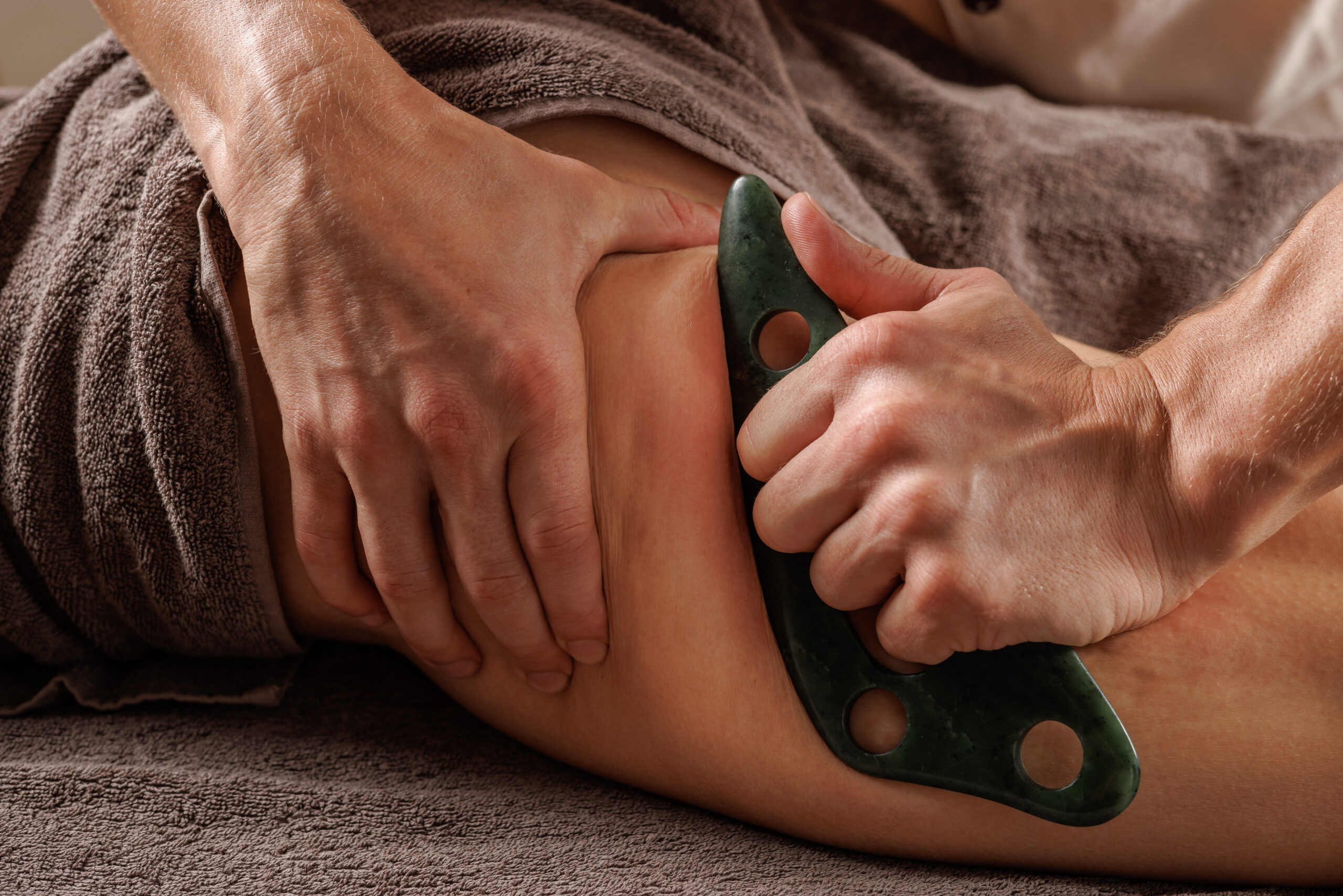
Here’s the part that surprises people: it doesn’t feel like a “real” massage. There’s no deep pressure, no kneading, no working out knots. The pressure is feather-light — about the weight of a nickel resting on your skin — and the strokes are slow, rhythmic, and directional. We’re not pushing into muscle. We’re working with the lymph vessels that sit just beneath the surface of your skin, encouraging them to open, contract, and carry fluid toward the lymph nodes that act as your body’s filtration stations.
If that sounds underwhelming, I promise you the results aren’t. Most people get off the table looking noticeably less puffy, feeling lighter, and — this is the part everyone mentions — needing to use the restroom soon after. That’s a good sign. It means the fluid is moving.
Why Your Lymphatic System Needs the Help
Think of your lymphatic system as your body’s internal cleanup crew. It carries away cellular waste, excess fluid, bacteria, and inflammatory byproducts that your blood can’t take with it. When it’s flowing well, you don’t notice it at all. When it’s congested, you notice everything — swelling, brain fog, breakouts, low energy, slow healing, frequent minor illnesses.
A lot of modern life works against this system. Sitting for long hours, tight clothing, low water intake, chronic stress, restrictive bras, post-surgical scar tissue, hormonal shifts, even long flights — all of it can slow lymphatic flow. The system is resilient, but it’s also subtle. It rewards consistency and patience, not force.
And this is one of the reasons MLD pairs so beautifully with deeper structural work. When fascia is restricted, lymph has a harder time moving through the spaces between tissues. We see this often with clients who come in for our myofascial release work — once those connective tissue restrictions soften, lymphatic flow tends to follow. The two systems are roommates, and they’re either both thriving or both struggling.
Who Tends to Benefit Most
In our studio, we see a few groups of clients who light up the moment they try MLD:
Post-surgical clients. This is one of the most powerful uses of lymphatic work. After procedures like cosmetic surgery, knee or hip replacements, mastectomies, or any operation that disrupts tissue, MLD helps reduce swelling, soften scar tissue, and shorten healing time considerably. Many surgeons now actively recommend it as part of recovery. (A note here: we always wait for surgical clearance before beginning, and we coordinate with timelines carefully.)
People dealing with chronic puffiness or bloat. If your face looks different in photos than it does in the mirror, if your rings don’t fit by evening, or if your stomach feels distended for reasons that don’t quite track with what you ate — MLD can offer noticeable relief. It’s not a weight loss tool, but the de-puffing effect is real and often immediate.
Clients with autoimmune conditions or chronic inflammation. Lupus, Hashimoto’s, fibromyalgia, long COVID, chronic fatigue — anything where the body is in a persistent inflammatory state tends to overwork the lymphatic system. Gentle, regular MLD can help take some of that load off.
Anyone recovering from illness. After a cold, flu, or infection, your lymph nodes have been working overtime. MLD helps clear out what’s left behind so you feel like yourself faster.
Pregnant and postpartum clients. With clearance from your OB, MLD is one of the safer and more comforting forms of bodywork during pregnancy, especially for swollen ankles and hands. Postpartum, it helps the body recalibrate as fluid levels shift back.
The “I just feel off” crowd. Some of our most devoted MLD clients can’t point to a specific issue. They just feel heavy, foggy, or stagnant — and they leave feeling lighter, clearer, and more themselves. Sometimes that’s the whole story, and it’s enough.
What MLD Is Not
I want to be honest about this, because there’s a lot of dramatic language floating around the wellness world right now. MLD is not a detox in the toxin-purging sense. Your liver and kidneys handle that. MLD is not a substitute for medical treatment of lymphedema, though it’s often part of a broader care plan supervised by a physician. And it’s not a shortcut to weight loss — what you’re seeing when puffiness goes down is fluid redistribution, not fat loss.
What it is is a way to support a system your body already has, gently and effectively. Think of it less as fixing something broken and more as helping something good work better.
What a Session Feels Like
You’ll be on the table in a warm, quiet room. The work is done directly on the skin with very little (or no) lotion, because the strokes need to gently stretch the skin rather than glide over it. Most sessions start at the collarbone area — yes, really — because that’s where the major lymphatic ducts empty back into the bloodstream. We open that “drain” first, then work our way outward.
The pressure stays light the entire time. If at any point it starts feeling like a regular massage, that’s a sign something’s off. The rhythm is slow and almost hypnotic — many clients fall asleep, which is one of my favorite compliments to the work.
Afterward, we’ll encourage you to drink plenty of water, move gently, and avoid heavy meals or alcohol for the rest of the day. The body keeps working long after you’ve left the table.
A Final Thought
I think the reason MLD has quietly become one of our most-loved services is that it asks something different of clients than most bodywork does. It asks them to slow down. To trust that something gentle can be powerful. To pay attention to systems they’ve never thought about before.
Your lymphatic system has been working for you every minute of your life. Once in a while, it’s worth working with it.
If you’ve been curious about whether MLD might be right for what you’re navigating — whether that’s a recent surgery, a chronic condition, or just a feeling that something’s stuck — we’d love to talk through it with you. Sometimes the lightest touch is exactly what the body has been waiting for.