Hey friends, it’s so good to have you here. Today I want to sit down with you (virtually, anyway) and talk about something that comes up a lot in my treatment room: scraping therapy, and how it works hand-in-hand with myofascial release. If you’ve ever scrolled past a video of someone running a smooth metal tool across an athlete’s calf and thought, what on earth is happening there, you’re not alone. I get questions about this almost every week, and I love that people are curious because once you understand what’s actually going on under the skin, the whole thing stops looking strange and starts making a lot of sense.
First, Let’s Talk About Fascia
Let’s start with the fascia itself, because honestly, that’s where the magic lives. Fascia is this incredible web of connective tissue that wraps around every single muscle, organ, bone, and nerve in your body. Picture the white, papery layer you peel off a chicken breast before cooking — that’s fascia, and you have it everywhere. When it’s healthy, it’s slippery and glides easily, letting your muscles move freely the way they were designed to. But when life happens — long hours hunched at a desk, an old sports injury, a car accident from years ago, even chronic stress — that fascia can get sticky, dehydrated, and bound up. It forms what we call adhesions, and those adhesions are usually the real culprit behind that nagging tightness that just won’t quit no matter how much you stretch.
So What Exactly Is Scraping Therapy?
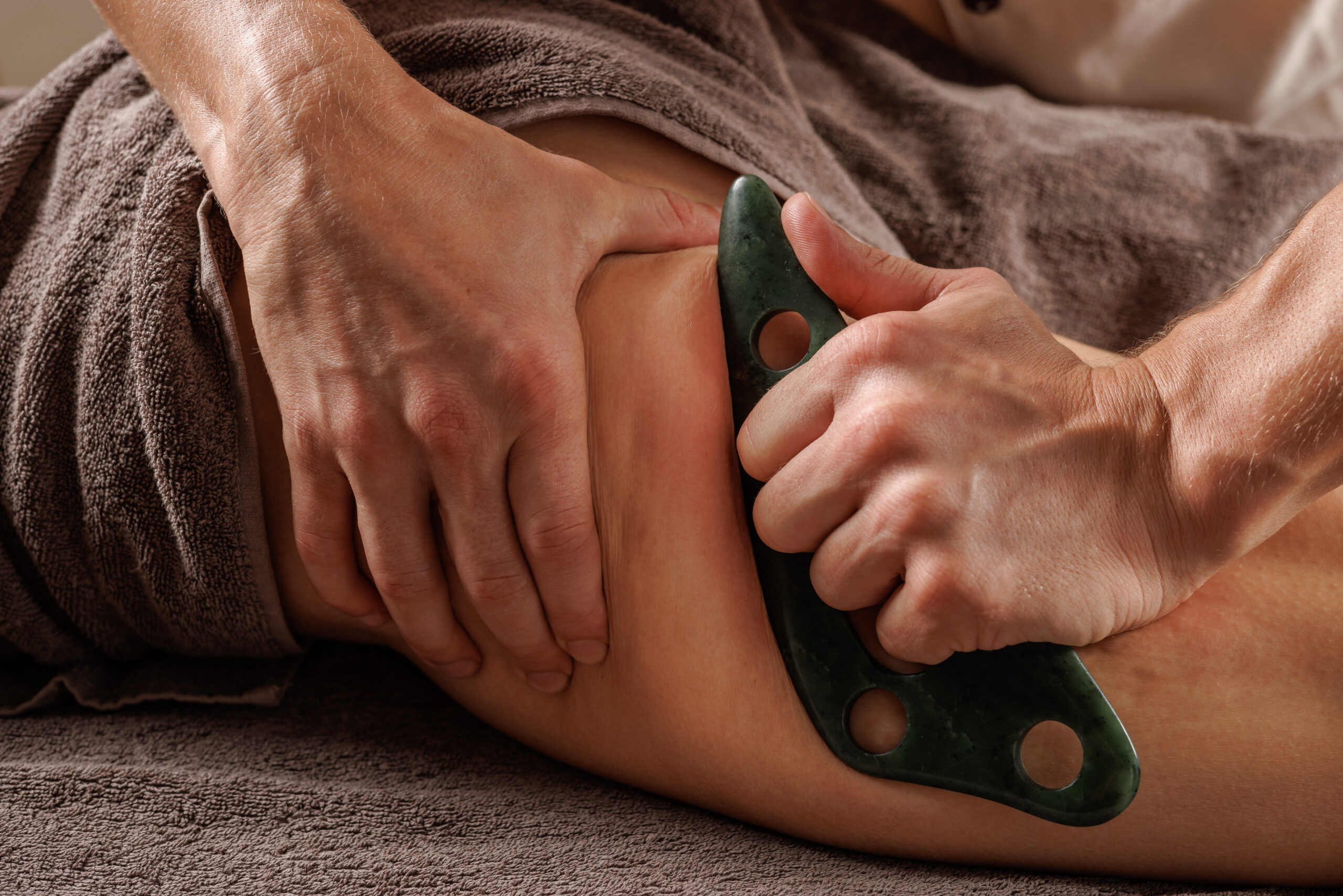
This is where scraping therapy comes in, and where it really shines as a partner to traditional myofascial work. Scraping (you may have heard it called gua sha, IASTM, or instrument-assisted soft tissue mobilization — they’re all variations on the same theme) uses a smooth-edged tool, usually stainless steel or stone, to glide across the skin with gentle, intentional pressure. My hands are wonderful, and I use them for the majority of every session, but there are moments when a tool can reach into a layer of tissue in a way fingers simply can’t. The edge of the instrument allows me to detect those gritty, restricted areas almost like a stethoscope picks up sound. I can literally feel the fascial restrictions through the tool, which helps me work with so much more precision.
How Scraping Actually Helps Your Body Heal
Here’s the part I find genuinely beautiful: scraping doesn’t just mechanically break up adhesions, though it does help with that. It also wakes up your body’s natural healing response. When the tool creates a small amount of friction across the tissue, it draws fresh blood flow to the area, which means more oxygen, more nutrients, and more of those amazing healing cells getting delivered right where you need them. Your body essentially says, oh, this spot needs attention, and gets to work repairing and rebuilding. That’s why so many of my clients report not just immediate relief, but ongoing improvement in the days following their session.
A Quick Note on Those Red Marks You Might See
Now, I want to be honest with you about something, because I think transparency matters. Sometimes scraping leaves behind temporary redness, and in some cases small reddish or purplish marks called petechiae. In traditional Chinese medicine, this is actually called sha, and it’s considered a sign that stagnant blood and toxins are being released from the tissue. From a Western anatomical perspective, it’s tiny capillaries responding to the friction. Either way, it’s not bruising in the painful sense, it doesn’t hurt afterward, and it typically clears within a few days. I always talk this through with my clients before we begin so there are no surprises, and I adjust pressure based on what your body is telling me in the moment.
Why Scraping and Hands-On Myofascial Work Are Better Together
What I love most about combining scraping with hands-on myofascial release is how they amplify each other. The fascial release work my hands do creates space, lengthens tissue, and invites the nervous system to soften. The scraping then comes in and addresses the deeper, stickier restrictions that need that more focused, targeted touch. Together they create a kind of conversation with your body — a back-and-forth that opens up patterns of tension that might have been locked in for years. I’ve had clients walk in with chronic neck pain they’ve carried for a decade and feel real, meaningful change in just a few sessions of this combined approach. That never gets old for me.
Who Tends to Benefit Most
This combination tends to be especially helpful for folks dealing with plantar fasciitis, IT band tightness, frozen shoulder, tennis or golfer’s elbow, scar tissue from old surgeries or injuries, and the kind of postural tension that builds up across the upper back and shoulders from too much screen time. Athletes love it for recovery, but you absolutely don’t need to be an athlete to benefit. Some of my favorite results have come from clients who just wanted to feel like themselves again after years of dismissing their discomfort as “just getting older.” Spoiler: it usually wasn’t just age.
Is It Right for You?
If you’re curious whether scraping therapy might be a good fit for what you’re dealing with, the best thing to do is come in for a conversation. Every body is different, and what works wonders for one person might need to be adjusted for another. That’s the whole reason I got into this work — not to apply a one-size-fits-all technique, but to actually listen to what your tissue is telling me and respond with care, intention, and a real plan to help you feel better in your body.
Come See Us at Creative Wellness Massage
So whether you’re brand new to this kind of work or you’ve been on your wellness journey for years and are ready to try something that addresses your tightness at a deeper layer, I’d love to see you. Reach out anytime, ask all the questions you want, and let’s figure out the right path forward together. Your body has been carrying a lot. It deserves some intentional, skilled attention — and a little release.
See you in the studio soon.